%201%20%5BVectorized%5D.svg)


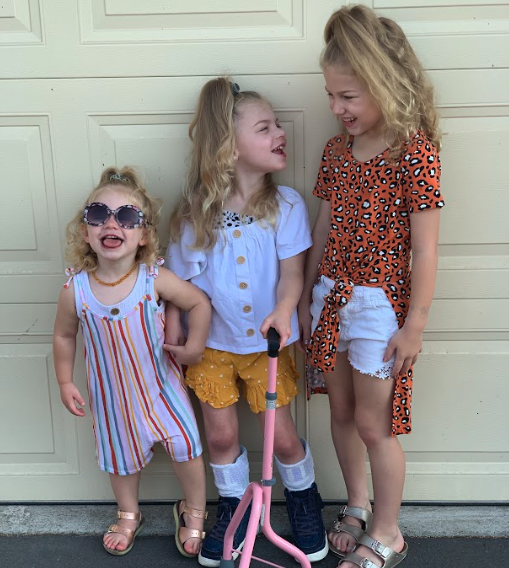
Ah, siblings.
Some are inseparable. Some fight like cats and dogs. Some are complete opposites. Some are weirdly similar.
One is loud, one is quiet.
One eats anything, one survives off beige food and air.
One thrives on chaos, the other needs life planned three business days in advance.
That's siblings.
And when one child is neurodivergent or has a disability, sibling relationships can become even more layered.
Not necessarily bad.
Just different.
Because while we're busy navigating therapy, appointments, school supports, emotional regulation, routines, support workers and all the moving parts disability parenting brings… siblings are growing up alongside it too.
And they notice more than we realise.
Sometimes They Understand Their Sibling Better Than Anyone
One thing that constantly surprises me is how intuitive siblings can become.
I've had moments where my daughter is dysregulated, I've tried every strategy I know, mentally waved the white flag, and then one of her sisters walks in and somehow says or does exactly the right thing.
Not because they were expected to.
Not because we sat them down and taught them how to handle meltdowns or regulate emotions.
But because siblings watch. They observe. They grow up alongside it all.
And somewhere along the way, they pick up some pretty incredible life skills.
I can tell in those moments there's this little sense of pride too — like "wow, I helped."
And honestly, it still baffles me sometimes.
Because I know at 12 years old I wouldn't have known how to support someone through an autistic meltdown.
Keeping words minimal. Giving simple choices. Offering a tight-pressure hug. Knowing when to distract and when to just quietly sit nearby.
Yet somehow, siblings often learn these things naturally just by growing up beside someone they love.
And it's pretty special to witness.
And then other days?
They can't stand the sight of each other.
One's yelling that their sibling is annoying, dramatic, embarrassing, the worst sister ever… while the other one is screaming because someone looked at them wrong or breathed too loudly.
Balance, right?!
Because sibling relationships in disability families aren't magically perfect all the time.
They're still siblings.
What Might Siblings Be Feeling?
This is probably the part we talk about the least.
Because siblings can hold a lot of feelings at once.
They might feel:
- Protective
- Proud
- Frustrated
- Embarrassed
- Left out
- Confused
- Resentful sometimes
- Very mature for their age
- Or like they need to "be easy" because everyone else already seems stretched
And often those feelings come with guilt.
Because they love their sibling.
So then they feel bad for feeling annoyed, jealous, or angry sometimes too.
But those feelings are normal.
Imagine being little and seeing:
- Your sibling get extra attention
- Adults constantly checking on them
- Support workers taking them places
- Extra days off school
- Therapy toys and sensory equipment that look fun
- Family plans changing around one child's needs
To a sibling, that can sometimes look like:
"Why do they always get the special stuff?"
Even when logically they understand the why.
And sometimes siblings quietly grieve things too:
- Family outings that feel stressful
- Attention that gets interrupted
- A parent constantly multitasking
- The unpredictability disability can bring into family life
That doesn't mean they love their sibling any less.
It just means they're human too.
What Can We Actually Do to Support Siblings?
This is the part most of us are figuring out in real time.
Not perfectly. Just intentionally.
Give Them Space to Vent
Sometimes siblings don't need solutions.
They just need somewhere safe to offload.
Let them say:
- "This is unfair."
- "I'm annoyed."
- "I wish things were easier."
Without immediately jumping into:
"But your sibling can't help it."
Because most of the time?
They already know that.
What they need first is to feel heard.
A simple:
"Yeah, I can understand why that felt frustrating."
can go a really long way.
Explain Disability and Neurodivergence Openly
Not one giant serious family meeting.
Just lots of little conversations over time.
Answer questions honestly. Talk about differences naturally. Explain why certain supports exist.
Sometimes siblings need help understanding:
- Different support doesn't mean different love
- Fair and equal aren't always the same thing
- Everyone in the family has different needs
And it's okay if they ask blunt questions too.
Kids are usually trying to understand, not be cruel.
Make One-on-One Time Feel Intentional
One thing I learnt pretty quickly?
Siblings don't necessarily need huge grand gestures.
They just want moments where they don't feel like they're competing with therapy schedules, appointments, behaviours, paperwork, or constant interruptions.
A while back, I made a little box filled with rolled-up activity ideas.
Whenever we needed one-on-one time, they got to pull something out.
It made the time feel intentional — and saved my mentally overloaded brain from trying to think of ideas on the spot.
Some things in our box were:
- Teach Mum a TikTok dance
- Home facials together
- Bike rides
- Ice cream runs
- Late-night Kmart trips
- Craft projects
- Baking something
- Blanket forts and movie nights
- "You choose dinner tonight" nights
One of our favourite things is a simple before-bed chat. No agenda, no screens, just a few minutes of uninterrupted time — talking about the day, sharing something, being a bit silly. It costs nothing and somehow means everything.
But the message underneath it mattered:
This time is just for you.
Let Them Be Kids Too
This one matters.
Because siblings in disability families often become incredibly empathetic, flexible, patient and emotionally aware.
But sometimes they also become "easy" too early.
The helper. The understanding one. The sibling who doesn't ask for much because they can already see how stretched everyone is.
And while those traits are beautiful, they're still kids.
They still need:
- Attention
- Play
- Boundaries
- Support
- Space to melt down sometimes too
They shouldn't always have to be the mature one.
Celebrate the Relationship Too
Not every sibling moment has to be deep and meaningful.
Sometimes the best thing you can do is create opportunities for connection that aren't centred around disability.
Silly moments. Shared jokes. Games. Activities they both enjoy.
Because alongside the hard stuff, sibling relationships in disability families can also be incredibly funny, protective, accepting and beautiful.
There's often a level of empathy and understanding that's hard to teach.
It just grows naturally over time.
Sibling relationships in disability families are rarely simple.
They're messy. Beautiful. Protective. Complicated. Funny. Exhausting.
Sometimes all before 8am.
You won't always get the balance right. None of us do.
But loving your children differently based on what they need doesn't mean loving them unequally.
And if you're even thinking about how your siblings are feeling while navigating disability parenting, it already says a lot about the kind of parent you are.
And if this kind of conversation feels familiar, this is exactly why Kindship Connect exists.
A space where families living this life can share the real stuff — the sibling dynamics, the guilt, the funny moments, the hard moments — with people who genuinely get it.
Because disability parenting affects the whole family.
And none of us were meant to navigate that alone.


