%201%20%5BVectorized%5D.svg)


Therapy sounds great in theory.
30 minutes a day.
A few strategies here and there.
Practice makes progress.
Early intervention is key and all that jazz.
But in real life?
You’ve got school drop-offs.
Siblings.
Work.
Dinner.
Exhaustion.
And trying to take a minute just to breathe.
And suddenly “just do therapy at home” feels like another thing on an already full list.
Let’s take the pressure off.
Because therapy at home doesn’t have to look like a separate, structured session.
In fact, I’ve come to learn after almost 12 years in this world, it works best when it doesn’t.
Therapy Doesn’t Have to Be a “Thing”
When I was first thrown into the early intervention world with my daughter navigating a cerebral palsy and autism diagnosis, I went all in.
Teaching background.
Creative brain.
Extra time at home at that stage.
Perfect recipe for going full throttle.
And if I’m honest? I loved those early days.
Big disclaimer though, that version of me isn’t really “typical life.”
Looking back, I think it was also a way of coping. It made me feel in control. Like I was doing something. Making the most of a situation I never expected.
So I went all in.
Activities.
Set-ups.
Intentional practice.
All the things.
And it worked. I’m really proud of what we both put into those early years.
But fast forward to school starting… returning to work… still having two other kids in the mix…
Let’s just say, it was a bit of a rude awakening.
Because therapy as a “thing” didn’t fit anymore.
Suddenly there was school refusal, anxiety, bigger emotions… and it became less about structured therapy and more about survival.
And that’s when the shift happened.

Start With What You’re Already Doing
You don’t need to find more time.
You need to use the time you already have.
Getting dressed.
Mealtimes.
Car rides.
Bath time.
Bedtime.
These are all therapy opportunities.
And over time, I’ve learnt that the older my daughter gets, the more it has to be this way.
Because you don’t have unlimited capacity.
And honestly?
You’re not meant to.
What This Actually Looks Like in Real Life
Sometimes it helps to see what this actually looks like day-to-day.
Not structured sessions.
Not perfect follow-through.
Just small moments that add up.
Communication (Speech, Understanding, Social)
It can look like:
- Pausing during meals so they can ask for more (even if it takes longer)
- Rephrasing what someone said so it lands better
- Giving choices instead of instructions
- Modelling language while you play or chat
I find myself doing this constantly, without even thinking about it anymore.
It’s just how we communicate now.
Regulation (Emotional, Sensory, Behaviour)
This is where a lot of the real work happens.
It might look like:
- Noticing early signs of overwhelm and adjusting before it escalates
- Giving extra time for transitions
- Leaving places early (even if it’s inconvenient)
- Building little reset moments into your day
You’re not avoiding things.
You’re helping your child build the skills to manage them.
Physical (Gross Motor, Fine Motor, Coordination)
This doesn’t have to be a physio session on the floor.
It can look like:
- Climbing at the park
- Dancing in the lounge room
- Carrying groceries
- Opening containers, getting dressed
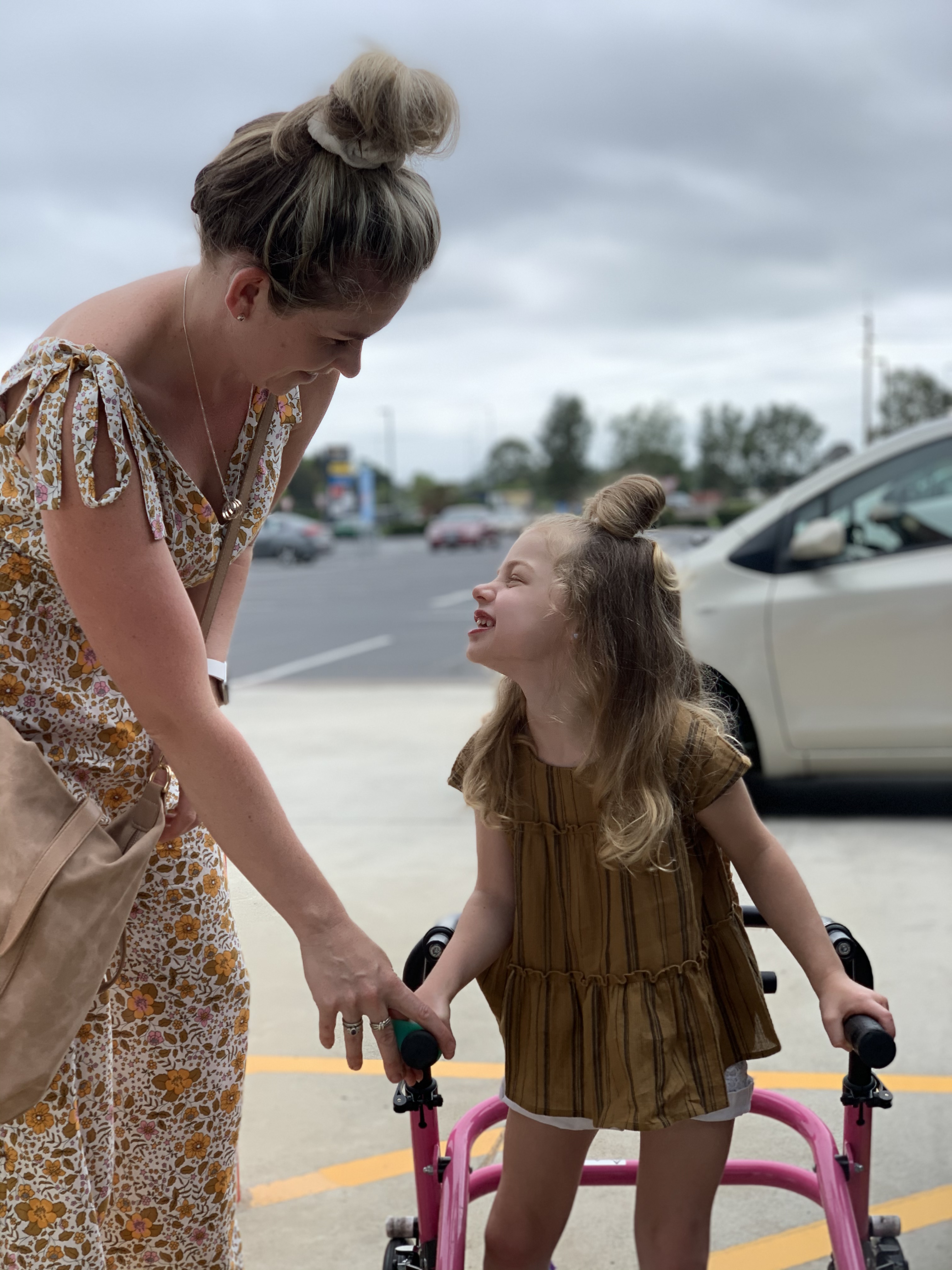
My daughter’s activities like Performability tick so many boxes without it feeling like “therapy.”
And that’s the sweet spot.
Social (Confidence, Interaction, Connection)
Social skills don’t only happen in sessions.
They happen:
- At the playground
- In group activities
- During everyday conversations
- In those slightly awkward, learning-as-you-go moments
Sometimes you guide.
Sometimes you step back.
Sometimes you’re just there as a safety net.

Pick One or Two Focus Areas (Not Ten)
In the early days, you leave therapy with a long list of things to work on.
And you want to do all of them.
Of course you do.
You want to help.
You want to see progress.
You want to make the most of every opportunity.
But trying to squeeze everything in?
It’s not just a recipe for burnout for you...it’s overwhelming for your child too.
Too many prompts.
Too many expectations.
Too much pressure.
And suddenly something that’s meant to support them starts to feel like work.
Now?
It’s about picking one or two things and letting the rest go (for now).
Focusing on:
- One communication goal
- One regulation strategy
- One small skill
That’s where you’ll actually see progress.
Because when it’s simple:
- It’s easier to remember
- It fits into your day
- Your child has space to learn without feeling overwhelmed
Small focus.
Less pressure.
More consistency.
And honestly? That’s where the magic tends to happen.
Follow Your Child’s Lead (Even If It Doesn’t Look Like Therapy)
Some of the best “therapy” doesn’t look like therapy at all.
It looks like:
- Playing
- Laughing
- Repeating something they love
- Doing activities they enjoy
My daughter does Performability, and it’s incredible.
Movement.
Confidence.
Social connection.
Coordination.
It ticks so many boxes at once, and she loves it. When they’re engaged, everything else comes more naturally.
Sometimes Support Looks Like Extra Support
There have been times where bringing in a support worker has helped take some of the pressure off.
Not to “do therapy perfectly”, but to:
- Support routines
- Build independence
- Create opportunities for practice
Because sometimes you need another set of hands.
And I get it, that whole “but I’m their parent, I should be able to do it all” guilt feeling.
It took me a while to realise…
I’m not a superhero.
And I’m not meant to be.
Accepting help isn’t failing.
It’s what makes this sustainable.
You’re Probably Already Doing More Than You Think
Here’s the part most parents don’t realise.
You’re already:
- Supporting communication
- Helping regulation
- Encouraging independence
- Adjusting constantly
Not in a structured, tick-the-box way.
But in the way your life now naturally runs.
You’re reading situations.
Anticipating needs.
Changing how you respond in real time.
That’s not nothing.
That’s skill. That’s experience. That’s therapy… just without the label.
My daughter has always struggled with transitions.
We’ve spent years working on it in therapy, but the reality is, transitions happen every single day.
Leaving the house.
Changing activities.
Moving between environments.
So without even thinking about it, I’m supporting her through them constantly.
Sometimes it’s giving her more time.
Sometimes it’s adjusting the plan.
Sometimes it’s just knowing when to push… and when not to.
Not in a structured way.
Just in the way our life flows now.
And Sometimes… It Just Looks Different
Some days aren’t about goals or progress.
They’re about:
- Getting out the door
- Navigating emotions
- Making it through without everything falling apart
And that might not look like progress from the outside.
But often, underneath it?
There’s growth happening.
Resilience building.
Trust building.
Capacity building.
Even on the messy days.

If I’m honest…
I wish someone had told me this earlier.
That therapy doesn’t have to be perfect.
That it doesn’t need to take over your whole day.
That you don’t have to do all the things, all at once, to make a difference.
I wish someone had told me that the small, everyday moments?
They matter more than you think.
That supporting your child through real life...the messy, unpredictable, exhausting parts, is the work.
Not separate from it.
A part of it.
Because for a long time, I thought I had to do more.
Be more.
Fit more in.
But really?
It was never about doing more.
It was about noticing what we were already doing.
Small moments.
Repeated often.
Over time.
That’s what makes the difference.
And you’re probably already doing more of it than you realise.
And if this is the kind of thing you wish someone had told you sooner…
That’s exactly why Kindship Connect exists.
A space where parents on similar journeys can share real-life experiences, what’s worked (and what hasn’t), and remind each other that you’re not doing this alone.
If you haven’t already, you’re always welcome to join us.