%201%20%5BVectorized%5D.svg)


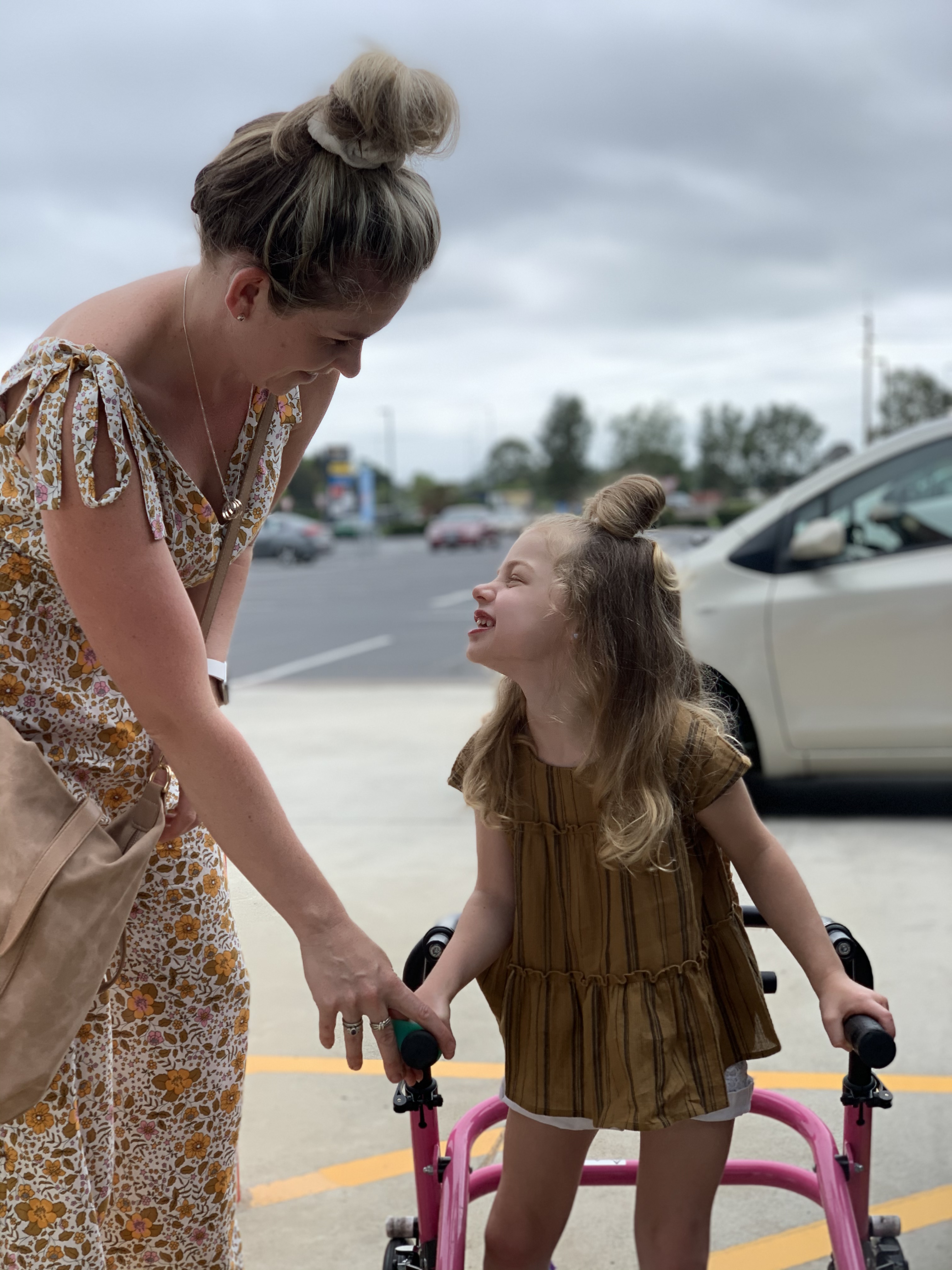
Before I had my daughters, I thought I was pretty good at inclusion.
I'd done the training. I'd sat through the professional development sessions. I genuinely cared. As an early childhood educator and primary school teacher, I really believed I had a solid handle on how to support children with disability and additional needs in my classroom.
And then I became a disability mum.
And I realised very quickly that I had barely scratched the surface.
Because here's the thing nobody tells you in the training: the only person who truly knows what works for your child is you. Not the textbook. Not the generic strategy list. Not the well-meaning professional who has met your child twice.
You.
The parent who has lived beside your child every single day. Who has figured out, through trial and error and a lot of hard moments — exactly what helps, what doesn't, and why.
That knowledge is everything. And for a long time, I was the only one who had it.
The exhaustion of starting from scratch. Every. Single. Time.
A new teacher at the start of the year. A new support worker. A new therapist. A new holiday program coordinator who really does want to do the right thing but has absolutely no idea where to start.
And every single time, you take a breath. And you tell the story again.
The diagnosis. The sensory stuff. What helps during a meltdown. What definitely doesn't help. The specific way she needs things explained. The things that look one way on the surface but are actually something completely different underneath.
By the time you've finished, you're flat. And you haven't even got to the actual meeting yet.
I did this for years. And I watched it wear me down in a way I couldn't quite put into words.
Until we created the Kindship About Me bio.
What it actually is
Not a medical file. Not a formal report. Not another piece of paperwork that lives in a folder nobody opens.
It's a few pages — written in plain language — that tells the story of your child in a way that anyone coming into their world can actually use.
Who they are. What they love. What lights them up. What they find hard. And most importantly, exactly what helps when things get difficult.
Once you have it, you share it. With teachers. Educators. Support workers. Therapists. Holiday programs. Friends and family who want to understand but don't always know how to ask.
Same document. Everyone gets a copy.
You never start from scratch again.
The section that matters most
The "I can struggle with / this can help" section is the part I love most about our bio. And the reason I love it is because it's specific.
There is a big difference between a guess and a strategy that actually works for your child.
The people around your child aren't failing on purpose. Most of them are genuinely trying. They just don't have the information yet, so they guess. And sometimes the guess is pretty far off.
OVERWHELMThe guess: "Offer a fidget toy."The strategy: Take them out of the room, read their favourite book, then slowly reintroduce them.
MID MELTDOWNThe guess: "Try to fix it and ask what they need."The strategy: Offer two concrete choices instead of an open question, and allow time and space.
ANXIOUSThe guess: "Reassure them everything will be fine."The strategy: Walk through exactly what's going to happen, step by step, before it starts.
TRANSITIONSThe guess: "Just tell them it's time to go."The strategy: Give a 5-minute warning, use the visual timer, let them carry a transition object.
See the difference?
One is a generic response. The other is your child's strategy, written by the person who knows them best, before a crisis, not during one.
That changes everything.
What's in the Kindship About Me bio
We've built it so it starts with the good stuff first. Because your child is so much more than their diagnosis.
A bit about me — who they are, their personality, what makes them tick. This section sets the tone. A whole person, not a list of needs.
Strengths — what they're good at, what comes naturally, what they're proud of.
Interests — the things they love. More useful than you'd think. A good teacher or support worker will use this constantly.
Goals — what they're working on, what they want to get better at.
Medical and the essentials — medications, equipment, anything someone needs to know for safety and daily life.
About their diagnosis — in plain language. What it is and what it actually looks like for your child day to day. Because a diagnosis tells you very little. What they experience tells you everything.
I can struggle with / this can help — specific situations, specific strategies. The section that makes this document actually work.
Contacts — who to call and when.
.png)
You can share it with anyone
School is the obvious one. And honestly, it makes the biggest difference there, especially at the start of every new year when you're handing your child over to someone who doesn't know them yet.
But it's not just for school.
Support workers. Therapists. Holiday programs. Sports coaches. Extended family who love your child but don't always know how to help. That family member who means well but sometimes needs a little context before they have an opinion.
Once you have it, everyone gets a copy.
And the other thing — as your child gets older, they can start contributing to it themselves. My daughter now helps write her own. She tells us what she wants people to know, what she's proud of, what she wishes people understood.
There is something really powerful about a child being able to hand someone a document and say: here, this is me.
This year she got me to bold a particular line in hers. The one that says: if I'm anxious, don't tell me I'll be fine. This is what actually helps.
She had some choice words about a certain teacher's aide who apparently hadn't read that part. We won't name names. We managed. But the point stands — she knew what she needed, she'd written it down, and she wanted to make absolutely sure nobody missed it again.
That's not just a document. That's a kid learning to advocate for herself.
It gives them confidence walking into new spaces. They already know the people around them have been given the information they need. They don't have to hope for the best.
Known before they even arrive. That's the goal.
You only do the work once
Fill it in properly, once, and then share it. Update it as things change, as your child grows, as new things work and old things stop working.
But you never start from scratch again.
And if you're sitting there thinking you don't have time, or you don't know where to start, or you're not sure what to write — that's exactly why we made the Kindship template. We've done the hard work of structuring it so you just have to fill it in.
It's free. It's yours. And it might save you more time and energy than you'd expect.
Grab the free Kindship About Me bio template here →


